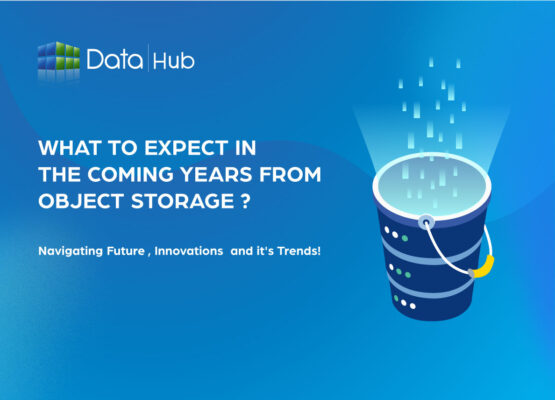
Object storage, known for its capacity to manage large volumes of unstructured data, will play an important role in shaping the future of data management.
IT leaders are managing more data than ever before, and the amount keeps growing every day.
These trends, from artificial intelligence integration to increased security measures, hold great potential to transform how we access and manage data.
How can businesses securely store all this information while still making it easily accessible for employees?
In this blog, we’ll take a closer look at some key trends expected to shape object storage future in 2026 and beyond.
Table of contents
- What Is Object Storage?
- The Future of Object Storage: Trends to Watch
- 1. Rise of AI and Machine Learning:
- 2. Enhanced Security Measures:
- 3. Scalability and Flexibility:
- 4. Edge Computing Integration:
- 5. Sustainability and Energy Efficiency:
- 6. Regulatory Compliance:
- 7. Hybrid and Multi-Cloud Environments:
- 8. Improved Data Management Tools:
- 9. Cost-Effective Solutions:
- 10. Enhanced Data Accessibility:
- Why Is Object Storage So Important?
- Key Features of Object Storage
- Benefits of Using Object Storage
- Common Use Cases of Object Storage
- Challenges in Implementing Object Storage
- Why you Choose Object Storage from DataHub Nepal?
- Conclusion
- FAQs
What Is Object Storage?
Object storage is an architecture developed to store large volumes of unstructured data such as videos, images, backups and logs.
Organizing information into objects comprising of data itself, metadata and unique identifiers makes this method of data storage highly scalable and ideal for cloud-based large scale data storage solutions.
Each object comes with three main components:
- The Data: This could include images, videos, or documents.
- Metadata: Data about data, such as date of creation or file type.
- A Unique Identifier: Think of this as a digital nametag to easily locate objects online.
This set up makes storing, retrieving and managing data effortlessly whether for small businesses or global enterprises alike.
The Future of Object Storage: Trends to Watch
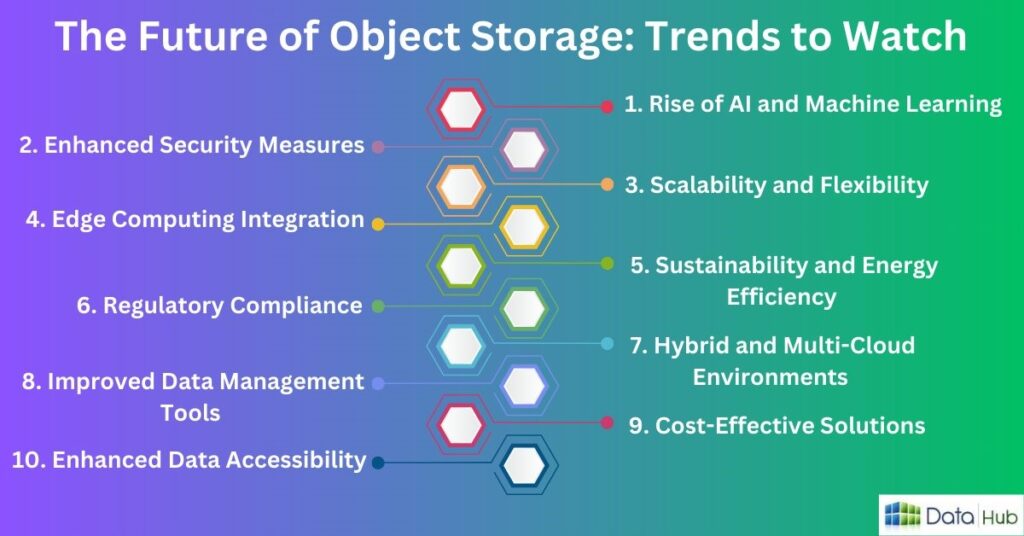
1. Rise of AI and Machine Learning:
One of the latest innovations is to combine AI/machine learning technology with object storage systems.
These technologies will enable smarter data management by automating categorization, indexing, and retrieval processes.
Imagine having access to a system that automatically tags and organizes your data based on its content, making it simpler for you to find what you need without manually searching through gigabytes of information.
Not only will this help enhance efficiency, but it will also create opportunities for data analysis and insight.
Machine learning algorithms are powerful tools for uncovering patterns and trends within large datasets, helping organizations make data-driven decisions.
Artificial Intelligence can also forecast future storage needs, optimizing resource allocation and lowering costs.
2. Enhanced Security Measures:
Cyber-attacks are becoming an increasing threat, security remains a top priority of any data storage solution.
Object storage features advanced encryption techniques and immutable storage options to ensure security and compliance.
In the future, these capabilities will continue to evolve with innovations like real-time threat detection and enhanced immutability features.
Immutable storage ensures that once data has been written to disk, it cannot be altered or deleted without first going through an authentication process.
This provides additional protection from ransomware attacks or any other forms of malicious activities that attempt to access stored information.
These enhanced security measures will give businesses peace of mind and ensure compliance with stringent data protection regulations.
Advanced security features may include multi-factor authentication (MFA), role-based access control (RBAC), and continuous monitoring.
These measures will assist in preventing unapproved access and quickly identify any threats in real time.
By establishing strict security protocols, organizations can protect sensitive customer data while earning customer trust.
3. Scalability and Flexibility:
As data volumes increase rapidly, storage solutions must provide both scalability and flexibility to accommodate this growth.
Today’s rapid data growth requires scalable solutions for storage and management, making object storage a critical necessity.
In the future, object storage will become even more advanced, offering unparalleled scalability to meet evolving demands.
Flexibility should also be top of mind; storage solutions must quickly adapt to changing business requirements without necessitating major infrastructure modifications.
Scalability and flexibility will become key assets for businesses looking to stay agile and competitive in today’s data-driven environment.
Scalable object storage solutions feature distributed architectures that enable them to manage vast amounts of data across various locations.
This distributed approach will increase fault tolerance and data redundancy, providing greater availability and reliability.
Object storage solutions will support hybrid and multi-cloud environments, allowing businesses to take full advantage of each platform’s strengths.
4. Edge Computing Integration:
Edge computing brings data processing closer to its source of generation. Integrating object storage with edge computing will reduce latency and speed up access speeds to the data stored therein.
Real-time data analysis is increasingly essential in applications like IoT devices and autonomous vehicles.
Businesses can leverage data-processing at the edge to make faster decisions while decreasing load on central storage systems.
Edge object storage solutions will enable seamless integration with edge devices for real-time data collection and analysis.
Healthcare, manufacturing and transportation sectors will especially find this beneficial as timely access to data is imperative for business success.
Edge computing will also reduce bandwidth use and operational costs by eliminating the need to transfer large datasets to central data centers.
5. Sustainability and Energy Efficiency:
As environmental awareness rises, energy efficiency and sustainability have become essential considerations when selecting data storage solutions.
Future object storage systems will emphasize energy reduction and green technology implementation.
Implementing energy-saving hardware, optimizing data centers for improved cooling, and adopting renewable energy sources may all be options for energy conservation.
By prioritizing sustainability, businesses can reduce their carbon footprint and help build a greener world.
Sustainable object storage solutions will incorporate energy-saving hardware components, such as low-power processors and solid-state drives (SSDs).
Furthermore, data centers will implement advanced cooling techniques, such as liquid cooling and free cooling, in order to lower energy usage and save costs.
Organizations will increasingly explore alternative sources of energy like solar and wind to power their data centers and reduce environmental impact.
6. Regulatory Compliance:
Data privacy regulations are becoming more stringent, and businesses must ensure their storage solutions comply with these standards.
Object storage systems provide robust data governance features, including audit trails and compliance reporting, to meet regulatory requirements.
In the future, these capabilities will be further enhanced with more automated compliance checks, real-time governance insights, and integration with advanced regulatory frameworks.
These tools will assist organizations in meeting regulatory requirements and avoiding fines or penalties.
Compliance will be key to building customer trust and protecting sensitive data.
Compliance features will include automated data classification, retention policies and legal hold capabilities.
These features will enable businesses to effectively manage the data lifecycle and ensure compliance with regulations such as the General Data Protection Regulation (GDPR) and California Consumer Privacy Act (CCPA).
Organizations will also benefit from using comprehensive audit logs and reporting tools that offer transparency into data access and usage.
7. Hybrid and Multi-Cloud Environments:
Hybrid and multi-cloud strategies are increasingly adopted, necessitating object storage solutions capable of supporting these environments.
Object storage systems currently provide solutions for transferring data across cloud platforms and on-premises environments, enabling hybrid workflows.
In the future, these systems will evolve to offer even smoother integration, smarter automation, and faster data mobility.
Companies will benefit greatly from using hybrid and multi-cloud environments, taking advantage of each platform’s best features while maintaining data consistency and accessibility. Being able to leverage these environments will transform an organization’s storage capabilities significantly.
Hybrid and multi-cloud object storage solutions will offer businesses centralized management interfaces, enabling them to manage data across multiple environments from a single platform.
These solutions will simplify data governance and reduce operational complexity, as well as providing data replication and synchronization services across locations for consistent availability of data.
8. Improved Data Management Tools:
Advanced data management tools will play a central role in the future of object storage, providing improved lifecycle management, automated tiering and predictive analytics services.
Automated tiering involves moving data between storage tiers based on usage patterns, with frequently accessed files stored on high-performance media and less frequently accessed ones stored on cost-efficient storage media.
Predictive analytics allows businesses to predict their storage requirements and optimize resource allocation.
Future data management tools will feature AI-powered analytics and machine learning algorithms capable of predicting storage capacity needs and optimizing data placement.
These tools offer improved metadata management, making it simpler for you to categorize, search for, and retrieve information.
Organizations will also benefit from automating data archiving and retention policies, ensuring compliance with regulatory requirements while simultaneously cutting storage costs.
9. Cost-Effective Solutions:
Cost-effective storage solutions have never been more important in an era where IT budgets are under intense scrutiny.
Implementation may include employing more efficient storage technologies, optimizing data deduplication and compression processes, and offering flexible pricing models.
Businesses that invest in cost-effective storage solutions can maximize their storage investments and achieve better return on investment (ROI).
Cost-effective object storage solutions use commodity hardware and open-source software, reducing capital expenses.
Organizations will also benefit from pay-as-you-go pricing models and subscription-based services that enable them to scale their storage capacity according to demand without large upfront investments.
Data deduplication and compression techniques will allow for increased storage efficiency, lowering costs and optimizing storage utilization.
10. Enhanced Data Accessibility:
Future object storage systems must prioritize data accessibility.
With features like faster retrieval times, improved metadata management and user-friendly interfaces that facilitate ease of accessing and using their data sets, organizations will find it much simpler to utilize it for their organizations’ benefit.
Data accessibility will not only increase productivity but will also facilitate greater decision-making and innovation.
Future object storage systems will offer intelligent data indexing and searching features, allowing users to quickly locate relevant information.
User-friendly interfaces will offer intuitive navigation and advanced search filters, making it simpler for managers of large datasets to oversee them.
Organizations will also reap the rewards of improved API integration, providing seamless data access and interoperability with other apps and services.
Why Is Object Storage So Important?
Data is expanding exponentially; according to recent estimates, humans create 2.5 quintillion bytes every day and the challenge lies in trying to store all that with traditional storage methods alone.
That is where object storage steps in as an invaluable solution: offering:
- Scalability: Need additional storage capacity? Simply add it without hassle or complications.
- Efficiency: Metadata helps quickly locate and organize information.
- Accessibility: Access your files anytime, from anywhere.
Key Features of Object Storage

1. Scalability:
Think of object storage as an expanding closet: each time you buy new clothing; more will find their place there!
As opposed to traditional storage solutions, cloud storage offers you unlimited capacity. Keep adding data without fearing running out of storage space!
2. Metadata Management:
Metadata serves as the brain of object storage. It intelligently organizes files to make searching for specific data easy.
Need to locate all of your vacation pictures from 2019? Look no further – Metadata is here for you!
3. Integration with Cloud Systems:
Object storage and cloud technology work hand in hand to allow businesses to store vast quantities of information for easy access across their networks – be they in New York or Kathmandu.
Benefits of Using Object Storage
Cost-Efficiency and Flexibility:
Object storage provides an alternative that only charges you for what you use – an invaluable benefit to startups and small businesses alike.
Enhanced Security Features:
With cyber-attacks on the rise, object storage comes equipped with advanced security measures like encryption and redundancy to safeguard your data beyond simple storage.
Common Use Cases of Object Storage

1. Media and Entertainment:
Ever wondered how Netflix or YouTube manages to deliver content to millions of users simultaneously?
That’s object storage at work! It ensures fast streaming and secure storage for enormous libraries of video content.
2. Healthcare:
Hospitals generate massive amounts of data, from patient records to medical imaging. Object storage helps keep this data secure, accessible, and compliant with industry standards.
3. Big Data and Analytics:
Companies analyzing massive datasets for insights rely heavily on object storage to keep their operations running smoothly.
Challenges in Implementing Object Storage
While object storage is amazing, it’s not perfect. Here are a couple of hurdles businesses might face:
1. Performance and Latency Issues:
For tasks that require high-speed data access, like financial transactions, object storage can sometimes lag.
2. Migration and Adoption Hurdles:
Switching from traditional storage to object storage isn’t always easy. The migration process can be time-consuming and requires expertise.
Why you Choose Object Storage from DataHub Nepal?
DataHub Nepal is a leading data service provider that introduced object storage for the first time in Nepal.
We offer scalable, secure, and cost-effective storage flexible to your needs. With their state-of-the-art data centers in Kathmandu and Butwal, you can trust that your data is safe and easily accessible.
Our advanced encryption and real-time threat detection keep your information secure, while their flexible pricing models help you save money.
Plus, you get the benefit of low latency and local compliance, all backed by 24/7 support to ensure smooth operations.
Choose DataHub Nepal for a reliable and efficient object storage.
Conclusion
Object storage future looks bright, as several trends aim to enhance its efficiency, scalability, and security.
Employing these trends, businesses can better manage their data and stay at the forefront of today’s ever-evolving digital environment.
As we look ahead to 2026 and beyond, object storage will play a critical role in how we store, manage and access information.
FAQs
OS is a data storage architecture that organizes files as individual objects instead of managing them as blocks or files, each object including data, metadata and a unique identifier.
Integrating Artificial intelligence (AI) helps automate data categorization, retrieval and analysis to make data management more efficient and intelligent.
Key security features include advanced encryption, real-time threat detection, immutable storage and compliance with data privacy regulations.
Edge computing helps reduce latency and access speeds by processing data closer to its source, offering real-time analysis applications a significant advantage.
Hybrid and multi-cloud environments allow organizations to take advantage of all the best features of each platform while still ensuring data consistency.